Friday, 3 July 2020

New York looked poised to legalize marijuana in 2020. Then COVID struck. What's next?

The NewsHouse staff

This is part of a Syracuse University student-driven reporting project through the NewsHouse website that is being published in USA TODAY Network. It takes a deep look at marijuana issues in New York as the state's drug laws remain in flux.

Count legal marijuana in New York among the victims of COVID-19, along with the hundreds of millions in tax dollars and thousands of jobs legalization might have generated.

Gov. Andrew Cuomo said on the last day of March that the state’s spring legislative session was “effectively over” after several state lawmakers tested positive for the coronavirus.

They came back in June to address COVID-related issues, but didn't address other outstanding issues.

Among the unfinished items Cuomo said would have to wait until next year was the legalization of marijuana for adult recreational use. Of the eight other states that were poised to legalize pot this year, only three appeared on track for legal weed in 2020.

Cuomo’s pronouncement of legalization’s demise was a turn of events given that, just a few weeks earlier, New York appeared all but certain to legalize marijuana as a way of raising revenue, lowering incarceration rates and getting a piece of a rapidly growing business sector.
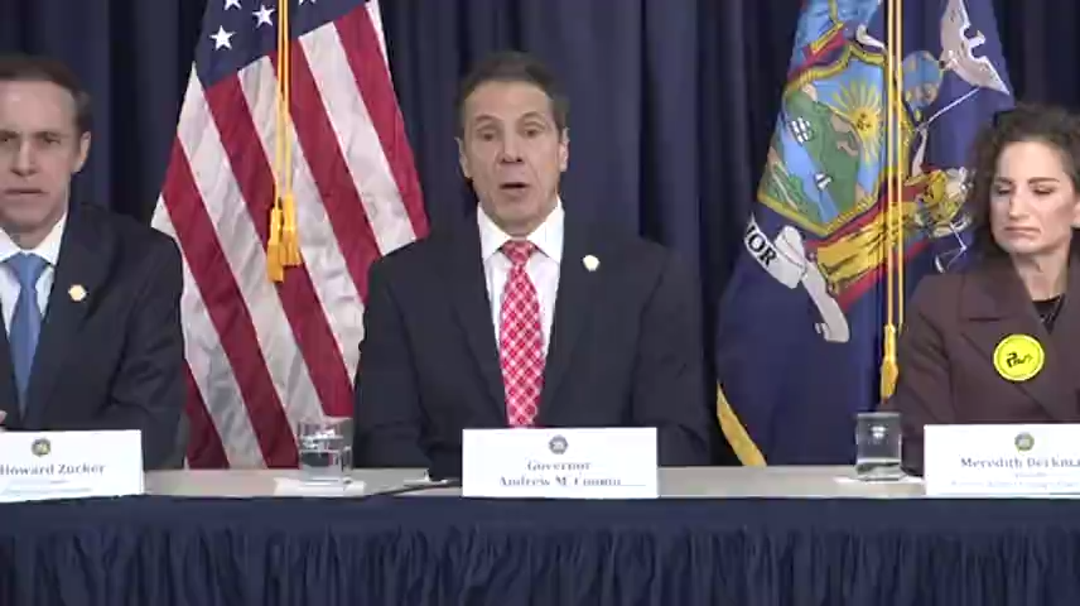
Gov. Andrew Cuomo announced Feb. 20, 2020, that he will visit states that have legalized marijuana to see what they are doing right and wrong.
Joseph Spector

Cuomo himself vowed to make legalization a priority during his State of the State address in January.

And although some opposition still remains in the state and a similar effort failed in 2019, people across New York expressed support for Cuomo’s plan.

In Januar,y, a Siena College survey of New York registered voters found that 58% supported legalization.

Meanwhile a less-scientific NewsHouse poll of more than 250 New York college students found that more than 91% favored legalization.

The NewsHouse also reached out to New York state lawmakers in March.

Of the 20 who responded, five were against legalization, one undecided and 14 were in favo,
“It makes no sense to me that cannabis and alcohol are treated differently under the law when cannabis poses less health risks than alcohol, is less addictive and there is no empirical evidence suggesting that marijuana is a ‘gateway drug’ to other types of drug use,” said state Sen. Jen Metzger, D-Rosendale, Ulster County.

More: Q&A: New York's new cannabis czar calls recreational marijuana the 'right thing to do'
More: New York marijuana: 5 reasons why the legal weed industry is excluding communities of color

How COVID-19 derailed legal marijuana in NY

Protesters urging legislators to pass Marijuana legislation lay on the floor outside the Assembly Chamber doors at the state Capitol Wednesday, June 19, 2019, in Albany, N.Y.
Hans Pennink, AP

With so much support, what went wrong? The culprit appears to be the same thing upending life everywhere – the COVID-19 pandemic.

State Sen. Luis SepĂșlveda, D-Bronx, has been a strident supporter of legalization. Yet he acknowledged that COVID-19 made a proper policy discussion about legalization impossible for now.

Eventually, he thinks marijuana will be legal for adult recreational use in New York. The coronavirus may have slowed that effort, but it has also made it more certain than ever, he said.

“Ultimately, when the storm settles, we are going to have to deal with it one way or another,” SepĂșlveda said.

“We are going to pass some form of legalization, and you know what, when you consider the incredible deficits that we are going to have as a result of corona, all revenue streams are going to have to be considered … including gambling, online gambling and things of that nature,” he added.

More: Marijuana supply chain: Why 'seed-to-sale' rules are key to New York legalization debate
More: Marijuana or cannabis? How racism, immigration shaped history of drug war in N.Y., U.S.

What college students say about NY's legal weed odds
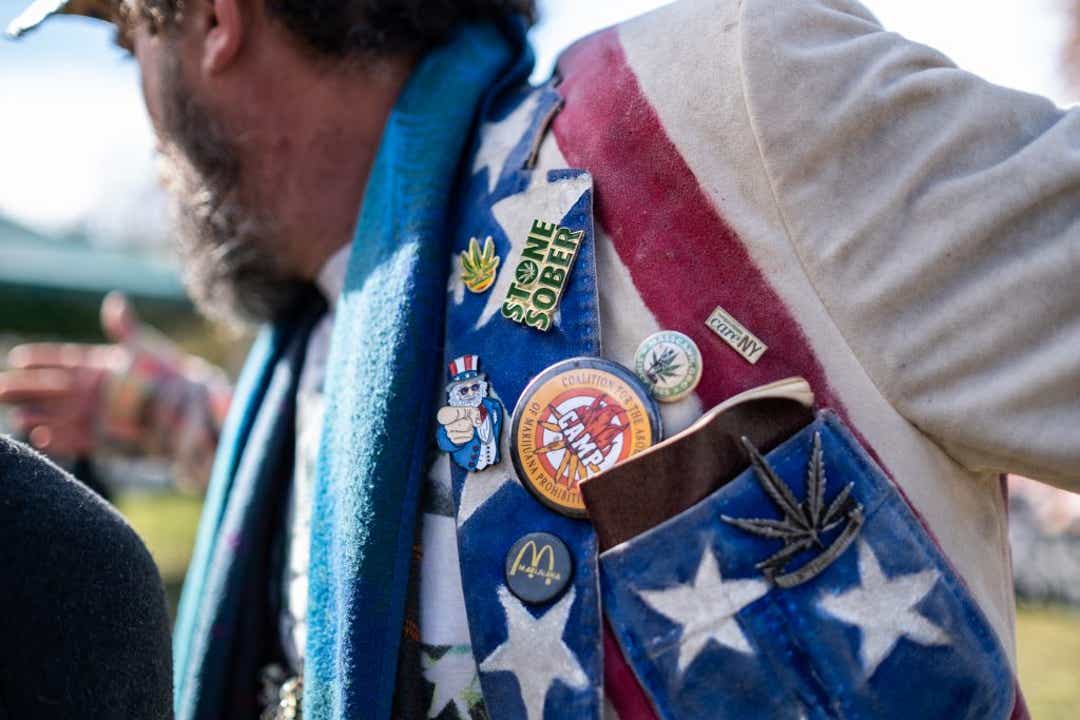
New York Harvest Festival and Freedom Fair organizer Rob Robinson is a CNY marijuana legalization activist interested in social justice and environmental reform.

Emily Kenny, Special Contributor to USA TODAY Network

Syracuse University policy studies freshman Lexi Whitcomb worries the opposite might be true.

“It has been seen as an evil,” the Connecticut native said of marijuana. “And I know a lot of lawmakers are older. So if they have that traditional view about it, they might be still thinking about that and the effects of it being negative as a drug.”

Whitcomb supports legalization and agrees with SepĂșlveda that the economy will need a boost after COVID, as does freshman Allison Boschetti of New Jersey.

“Right now, the coronavirus pandemic is taking a huge toll on our economy, and the legalization of marijuana could help to build up our economy again,” said Boschetti, who studies public relations.

She added that it’s “foolish to delay this when legalization will inevitably happen.”

But more than economics, Boschetti supports legalization as a social justice issue, citing the toll the war on drugs has taken on urban and minority communities — an argument made by many lawmakers in support of the law.

Economics senior Luis Solano supports legalization but said it was a smart decision to delay in the light of the COVID outbreak so the state could focus on stopping the virus.

In his home state of California, Solano said having weed legal has been a benefit.

“People are definitely less on edge about buying marijuana,” he said. He added that marijuana is “one less thing for law enforcement to worry about,” although he said regulation of driving under the influence is a problem.

Assemblyman David Weprin, D-Queens, spoke at a rally in January 2020 at the state Capitol on the need to make sure revenue from marijuana sales goes back into communities of color.

Joseph Spector

New Yorker Dashawn Austin, a marketing and advertising student, said he supports legalization and is understanding of the delay. “I just don’t want it to slip through the cracks,” he added.

But Austin thought legalization might affect campus culture, hoping that university police would worry about it less.

“I don’t think that marijuana should still be illegal,” said Haley Francois, a first-year accounting from Scotia, New York.


“So if a politician thought it should stay illegal, I wouldn’t vote for them.”

Monday, 29 June 2020

Rules Panel Forwards Nelson’s Cannabis Board Nomination

By Bethaney Lee


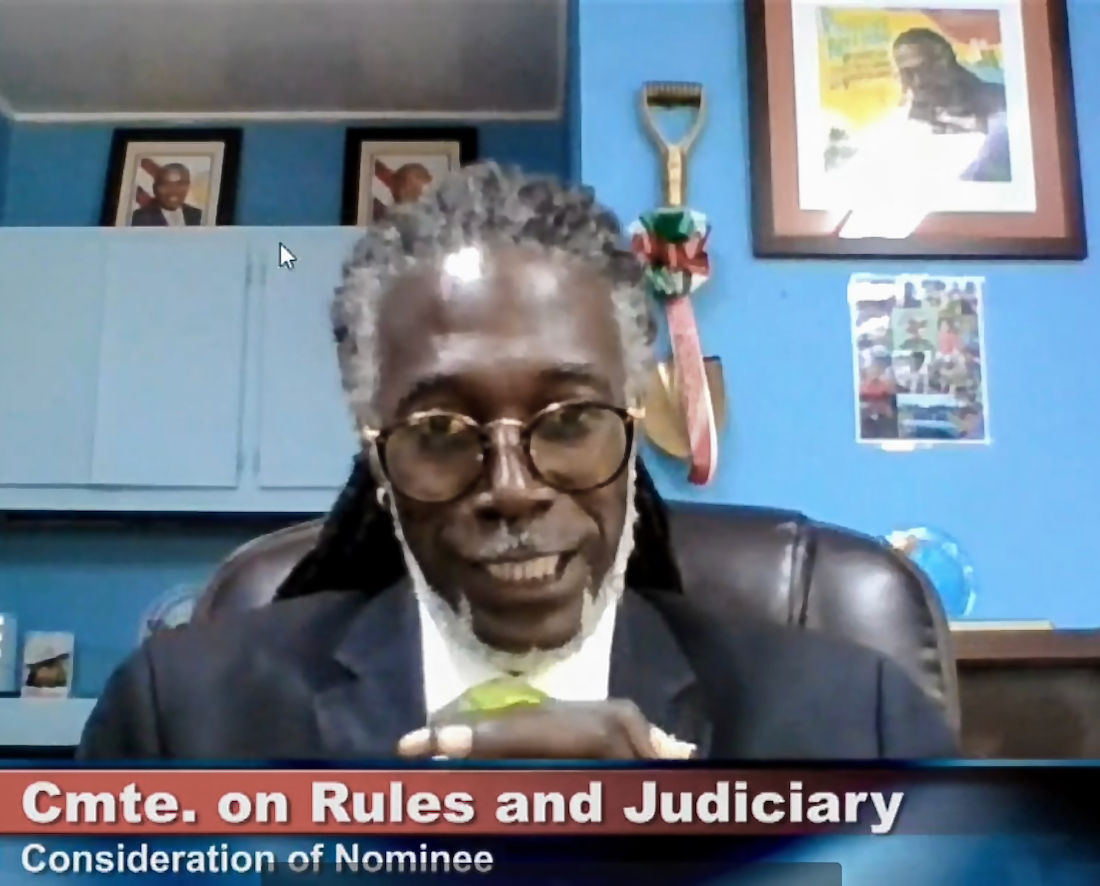
The Rules and Judiciary Committee on Friday forwarded the nomination for Virgin Islands Department of Agriculture Commissioner Positive Nelson to serve on the Cannabis Advisory Board, putting an end to the notion that the longtime cannabis activist had a potential conflict of interest.
Nelson, who was the primary sponsor of the Medical Cannabis Patient Care Act, which legalized medical cannabis in the territory, said his 16 years of advocacy has prepared him “to add tremendous value to the discussions, considerations and decisions for which the board is tasked.”
During Friday’s committee meeting, Sen. Myron Jackson said the conflict of interest the body identified before is now no longer relevant. In prior meetings, it had been explained that the Revised Organic Act of the Virgin Islands states no member of the Legislature can be appointed to any office that has been created by the Legislature during or one year after the expiration of their term.
But should Nelson’s nomination be ratified, he plans to serve on the board and supports the enhanced legislation proposed by Gov. Albert Bryan Jr. that revises the Virgin Islands Cannabis Use Act.
“Senators, as you already know, no law is perfect. You are also quite acquainted with the laws of supply and demand,” Nelson said. “There has always been an appetite for cannabis use and this has only increased since modern science and research have proven what Bob Marley, Peter Tosh and the Ancients have known and professed for decades and millenniums.”
The nominee proposed that if locally cultivated cannabis was available for sale in a regulated market, with policies established by the Cannabis Advisory Board, it would be a win for the U.S. Virgin Islands. Nelson said it would improve the economy and perhaps enhance the territory’s human and environmental health.
Sen. Novelle Francis Jr. said he didn’t always support marijuana-related legislation, “but has since garnered an open mind and have had many discussions in respect to cannabis and the legalization of it. … Now, I am open to it.”
Nelson told senators, “The interest is way more than you may see publicly.” Cannabis users spread across the entire spectrum Nelson said and added that many individuals are “closet users” for fear of risking their jobs and reputations.
Nelson said he hopes the advisory board can set up cannabis use permits before the end of the year.
“It depends on how serious we are,” he said. “But there is a cookie-cutter footprint for us to model moving forward. We are not pioneers at this point.”
The committee also forwarded three additional bills to the Committee of the Whole and moved forward the nominations of Lois Hassel-Habtes to serve on the board of trustees of the University of the Virgin Islands.

Biden-Sanders Task Force Discusses Marijuana Legalization Recommendation For Former VP

Members of a criminal justice task force created to inform presumptive Democratic presidential nominee Joe Biden’s campaign have been discussing marijuana legalization—a policy the former vice president continues to oppose.
Most of the group—which consists of advisors appointed by both Biden and former primary rival Sen. Bernie Sanders (I-VT)—support ending cannabis prohibition, and advocates have held out hope that they would recommend that Biden adopt the policy platform in the run-up to the November election.
While some members have publicly talked about the issue since joining the task force, including Linn County, Iowa Supervisor Stacey Walker, who recently commented on the need for reform in light of racial disparities in marijuana criminalization, a new report from Politico appears to be the first confirmation that the group itself is actively considering a formal recommendation on the policy change.
“Multiple people said marijuana policy has been discussed on the criminal justice panel, one of the policy groups of the unity task force,” the outlet reported. “Sanders appointees have advocated for legalization. Some Biden appointees personally support legalizing pot and have debated putting the policy in the panel’s recommendations to the former vice president, according to two people familiar with its deliberations.”
A majority of panel members appointed from both camps have previously gone on record in favor of legalization. That includes Tennessee Sen. Raumesh Akbari (D), former federal prosecutor Chiraag Bains, former Acting Assistant Attorney General Vanita Gupta, former Attorney General Eric Holder, Rep. Bobby Scott (D-VA) and Walker.
“There’s an opportunity to advance a really bold agenda on criminal justice,” Bains, a Sanders-appointee to the task force, said. “This is part of envisioning a completely different future, not returning to a pre-Trump era. I say that as someone who served proudly in the Obama administration. We just have to be much more aggressive about rooting out systemic racism and injustice in the legal system.”
Biden should “end the War on Drugs, including by legalizing marijuana,” he told Politico.
Walker, whose position on the issue has been lesser-known than other members, also talked about the need for reform during an interview with Little Village that was published on Wednesday. The Iowa official said he knows many white people, including those from prominent families in the state, who consume cannabis and travel to legalized states to obtain it without concern about potential criminal penalties.
“It is no secret that African Americans use marijuana as a substance, recreational substance, just as much as everybody else. I often say, I operate in professional spaces. I know most of my white professional friends in this state use marijuana,” he said. “They do it without ever, ever, ever thinking they will face some sort of legal consequence. It doesn’t even cross their mind. They talk about it openly.”
Watch Walker talk about racial injustices in cannabis criminalization below: 
“They don’t ever think about a legal consequences because it’s not real to them— because they can’t conceive of it because they’ve never faced a consequence,” he added. “We’ve just created a system that over-criminalizes people by their race and by their economic situation. That is not right. It is not fair. It’s an aberration of justice.”
He went on to say that decriminalizing cannabis would minimize police encounters that lead people, particularly from communities of color, to be incarcerated and enter the criminal legal system.
Biden has backed the modest reform of decriminalizing marijuana and said that people should be diverted to treatment instead of facing jail time for possessing drugs, but he’s declined to get on board with the majority of Americans, particularly Democrats, who embrace fully legalizing cannabis. He’s opted instead to draw the line at legalization for medical use, expunging prior records, allowing states to set their own policies and federal rescheduling.
Bains said earlier this month that decriminalization is not sufficient, as it “typically means that you don’t have a criminal penalty, but you could still be issued a civil fine. And then there are other kinds of consequences that could follow from that.”
“It’s still illegal conduct,” he said. “If possession of marijuana is just decriminalized and that is the hook for extensive police involvement in people’s lives, and if you haven’t addressed the underlying systemic problems in policing and the justice system overall, then people could continue to be stopped and searched and frisked and so forth.”
It’s not clear whether the task force will ultimately recommend that Biden adopt a pro-legalization platform—or if he would accept that recommendation even if they did. Pressed repeatedly on the issue, Biden has continued to argue that more research should be done before enacting broad reform.
He also recently indicated that his personal experience knowing individuals who consume cannabis has not convinced him that the plant should be legal for recreational use.
For what it’s worth, Sanders doesn’t seem especially optimistic that the former vice president will evolve further, declining in an April interview to list the policy among those from his own platform that he feels Biden will come around to.
That said, as President Trump’s reelection campaign pushes to frame the incumbent as the criminal justice reform candidate, there may be added pressure on Biden to align himself with more progressive policies such as legalization.
Here’s an overview of where members of the Biden-Sanders criminal justice task force stands on cannabis policy: 
Akbari, the Tennessee senator, has filed legislation to legalize marijuana in his state and he’s said the reform move is necessary both to promote social equity and to generate revenue that can be used to fund public schools.
Bains, who also serves as the director of legal strategies at Demos, has voiced support for Sanders’s cannabis legalization plan and emphasized the need for racial equity in the legal industry.
Justin Bamberg, a South Carolina lawmaker, has cosponsored legislation to decriminalize marijuana and legalize medical cannabis.
Gupta, president of the Leadership Conference on Civil and Human Right, backs legalization and has strongly condemned harsh criminalization policies for non-violent drug offenses.
Holder, the former top prosecutor in the U.S., has said that he’d vote in favor of legalizing marijuana if he was in Congress and claimed to have internally tried to convince the administration to reschedule cannabis.
Symone Sanders, senior advisor to Biden, doesn’t have a clear public stance on legalization, but she’s characterized Biden’s modest marijuana reform plan as being progressive.
Scott, a current member of the House, has cosponsored legislation that called for marijuana descheduling and reinvestments in communities harmed most by prohibition.
Walker’s views on the issue became clearer in the recent interview, where he stressed that cannabis laws have been enforced in a racially discriminatory manner.

Thursday, 25 June 2020

District Attornery To Reduce, Dissmiss Past Marijuana Convictions

"Our office recognized the undue burden that these prior convictions can have on people's livelihood, both past and present."

Federal Commission Pushes Expansion Of Marijuana And Psychedelics Research For Military Veterans

By Kyle Jaeger
A federal commission tasked with developing recommendations to improve mental health treatment for military veterans has reached a surprising conclusion: Congress and the executive branch need to promote research into the therapeutic potential of marijuana and psychedelics such as psilocybin mushrooms and MDMA.

Following months of meetings, the Creating Options for Veterans Expedited Recovery (COVER) Commission released its report in January. But despite the novelty of its drug policy findings, the document has gone largely unnoticed by reform advocates and the media. Chaired by presidential appointee Jake Leinenkugel, the panel determined that cannabis and psychedelics represent promising mental health treatment options for veterans that should be fully explored.

“Medical cannabis and psychedelic drugs may have uses in treating mental health issues among veterans; however, these substances are currently classified as Schedule 1 under the Controlled Substances Act, which precludes VA from conducting research on their efficacy,” the panel said.

The scheduling status of these substances has meant that the process of obtaining approval to research them is needlessly burdensome and that the supply of marijuana and other controlled drugs that’s available for studies is inadequate, the commission, members of which were appointed by congressional leaders and the president, found.

“The U.S. federal government’s policies have blocked externally valid, randomized clinical trials on the effects of cannabis,” the report says. “Scientists seeking to conduct research on cannabis must submit to an arduous application process that may last years. The research requires approval from multiple government agencies, including some with stated opposition to any therapeutic uses of cannabis.”

The panel further asserted that the Schedule I status of the drugs has effectively blocked VA from researching them at all, though that point has been disputed by advocates.

“Because VA is unable to conduct research into issues that are actively affecting veterans’ health care (medical cannabis) or issues that could dramatically affect veterans’ health care (medical psychedelics), VA is unable to explore possibilities such as whether medical psilocybin is effective in decreasing anxiety and depression in patients with life-threatening cancer. The opioid epidemic highlighted the need for third-party research into negative effects of treatment interventions and underscored that FDA approval alone does not reveal all of the potential negative consequences that can come about when a prescription treatment is made available to the public.”

Veterans across the U.S. are already using cannabis in compliance with state laws to treat a host of mental health conditions, the report states, and that “necessitates that VA better understand medical marijuana, and how it can benefit and harm patients who use it, so VA providers can better care for these veterans.”

Reform advocates and a growing group of bipartisan lawmakers have long argued that expanding research into the medical value of cannabis for veterans is an imperative—but what’s particularly striking about this commission’s report is that it explicitly acknowledges the potential of specific psychedelics as well. It notes that the “psychedelic research movement is gathering momentum” with investigations into how psilocybin and MDMA can impact conditions such as post-traumatic stress disorder being carried out privately by universities and research institutes.

“Although the findings have limited generalizability due to sample size and homogeneity issues, studies have shown some promise for treating disorders for which available treatments are insufficient—mood, substance, anxiety disorders, post-traumatic stress disorder—using psychedelics, including MDMA,” the COVER Commission report says.

To that end, the commission issued a recommendation: VA should “engage with other federal agencies, as appropriate, to research the potential short- and long-term risks, as well as benefits, of medical cannabis and psychedelic drugs.”

It also recommends that the executive and legislative branches require the National Institute On Drug Abuse to develop “strains of cannabis with THC levels equivalent to those being used by medical cannabis users in the states where medical cannabis is legal to ensure that research on medical cannabis use generates meaningful information on the related risks and benefits.”

That would address the fact that studies have shown that the marijuana that’s produced at the only federally authorized manufacturing facility is chemically more similar to hemp than cannabis sold in state-legal markets.

Further, VA physicians should be given “up-to-date information on research related to use of medical cannabis and psychedelics, including MDMA” and be better educated about “their ability to discuss the benefits and possible negative effects of medical cannabis with veterans in their care,” the report continues.

The panel said that there “are significant questions about the benefits and costs of using cannabis and psychedelics in treating mental health issues. The efficacy and safety of these types of treatments are unclear, but it is essential that VA engage in research to better understand them.”

“VA should engage with other federal agencies to conduct research into the positive and negative effects on veterans’ mental health of medical cannabis and psychedelics, including methylenedioxymethamphetamine (MDMA),” a summary of the report states.

Rep. Lou Correa (D-CA), a longtime advocate for marijuana research for veterans who is sponsoring the VA Medicinal Cannabis Research Act, told Marijuana Moment that the commission’s report “shows exactly why my bill is so important.”

“The Department of Veterans Affairs acknowledges cannabis can be a valuable medical tool for our veterans,” he said. “We must pass the Medicinal Cannabis Research Act so the VA can finally conduct this critical research and get veterans the medicine they need.”

Correa’s medical marijuana research bill was approved by a House committee in March but has not yet been scheduled for floor action by Democratic leaders.

Based on testimony in past hearings, it’s unclear whether VA will be inclined to embrace the COVER Commission’s recommendations, as department officials have stood opposed to several modest marijuana reform bills that were discussed in committee last year. That included legislation to protect VA benefits for veterans who use marijuana, allow the department’s doctors to recommend medical cannabis and expand research into the plant’s therapeutic potential.

In any case, the commission’s report seems to reflect an evolved understanding of the policy changes that would be necessary to effectively investigate whether marijuana or certain psychedelics would be able to provide relief to veterans suffering from a wide range of mental health conditions. It was released three years after the panel was established as part of the 2016 Comprehensive Addiction and Recovery Act.

Transcripts of commission meetings leading up to the report’s publication showed that members routinely participated in conversations about the limitations of mental health research opportunities for controlled substances under prohibition.

For example, Leinenkugel, the chairman, who has previously expressed interest in advancing VA studies into the medical benefits of marijuana for veterans, said during a hearing in July 2018 that he was “blown away” by the amount of research that’s been conducted on the subject in other countries such as the Canada and Israel.

“They, for some reason, found much more reason to take cannabis and cannabinoid oils to a further legal way for their veterans, not for recreation but for usage of the veterans,” he said. “It was a wake-up call for me personally.”

Col. Matthew Amidon, a member of the commission, told the chair that the panel “should remember also that there’s H.R. 5520, which is the 2017 Cannabis Research Act, which is a bill right now which we might want to refer to as we articulate a vision with cannabis bills.”

At another meeting, Leinenkugel said that “I think that our largest [veterans service organizations] have stated through their membership that over 90 percent of American Legion, which is two million strong, veterans are advocating that we at least take a look at research within the VA, which I don’t think we’re doing.”

“To me, that makes no sense. It’s a plant, it’s an herb. I’m not advocating for recreational use at all, but from this commission, we need to look at every variation of complementary type of care under what we had yesterday, whole health,” he said. “I know I’m editorializing a little bit, but I want to at least get it on the public record that these are things that I think we need to start taking a look at.”

All told, the conversations reflect a growing recognition that—despite ongoing federal prohibitions—there’s a need to promote research into controlled substances that hold therapeutic potential. And that’s not just coming from advocates, it’s coming from Trump appointees and military brass alike.

Now it’s up to Congress and the White House to follow through with the recommendations of the panel that the two branches created and appointed.