Article by Peter Gigante, Head of Data Research at Eaze, and Liz Klinger, co-founder and CEO at Lioness, provided exclusively to Benzinga Cannabis for publication.
Longer. Faster. Better. More.
The
interplay between intimacy and cannabis is familiar to many consumers,
who have long used it to enhance their sex lives. But marijuana’s effect
on orgasms has largely been documented only anecdotally — until now. To
better understand the plant’s impact on sex, Eaze partnered with Lioness — maker of smart vibrators with climax-tracking sensors — to study THC and CBD in the bedroom.
Here’s
the big takeaway: Cannabis can enhance your orgasms no matter who you
are. While a satisfying sex life is the result of many variables,
cannabis can increase the length, frequency, and quality of your orgasms
and pleasure sessions whether you’re single or married, solo or with a
partner, young adult or silver fox.
Report
data was collected via an online survey and journaling. The survey was
conducted by MarketView Research and completed by 432 Lioness newsletter
subscribers across North America from 6/23 to 7/1, and consisted of all
genders and non-gender-conforming consumers.
Journaling included a
group of 19 Lioness users who volunteered to try different products with
their device and record their experiences per session; six products
were tested (one per category of vaporizer (DomPen Pineapple Coast/ Hempbase Topical Thunder), edible (Plus Sour Blueberry/ Vital Leaf Tinctures), and lubricant (OmEdibles Body Oil / KushQueen Ignite) for THC and CBD).
Key takeaways:
Longer. Cannabis increased the longevity of pleasure sessions for 64% (solo) and 73% (partnered) of respondents.
Faster. Cannabis eased reaching orgasm for 63% (solo) and 71% (partnered) of respondents.
Better. Cannabis made pleasure sessions significantly more satisfying, whether solo (85%) or with a partner (79%).
More. 43% (solo) and 48% (partnered) of respondents said adding cannabis resulted in more orgasms for many respondents.
Other fun facts:
THC-infused edibles and vapes were most effective at increasing the number of orgasms, followed by CBD edibles and vapes.
Married
people were the most likely (81%) to report increased duration of
partner sessions with cannabis; followed by single (69%) and
widowed/separated/divorced people (71%) during partner sessions.
84% (partnered) and 80% (solo) of respondents reported cannabis helped them find sex toys more pleasurable.
When
compared to sex with alcohol, cannabis creates more intense orgasms
(66% vs 2%), longer sessions (57% vs 6%), and more satisfying foreplay
(55% vs 3%).
It’s
worth noting that there is no magic number when it comes to cannabis
dosing to enhance sex — it’s important to find what works for you.
Survey respondents greatly ranged in the typical amount of cannabis they
used.
Longer Sessions
Cannabis can increase the longevity of your sexual experience — whether you’re partnered up or riding solo.
Using cannabis to spice up your married life? Married respondents reported lengthier sessions, with or without their partners.
Additionally,
respondents who self-identified as medium-dosing consumers experienced
longer sessions under the influence of cannabis (82% much/somewhat
longer) than others who self-identified as high (63%) or low (70%) dose
consumers.
Which
cannabis product helps you stay in the pleasure zone the longest? THC
edibles appear to have the most significant impact on orgasm length and
frequency. In general, respondents found THC products to be marginally
more effective in enhancing their sexual experiences than CBD products.
More Sessions
Longer
sessions? More orgasms. With or without a partner, respondents (who
typically have an average of two orgasms per session) found that they
experienced a greater frequency of orgasms with the aid of cannabis.
Interestingly
enough, high-dose consumers were more likely to have multi-orgasmic
sessions in general, with or without the aid of cannabis. Similarly,
high-dose consumers were more likely to experience an increase in
orgasms during solo sessions with cannabis (62% said more orgasms, vs
36%/41% low and medium dose, respectively.)
Those
who identified as daily or frequent cannabis consumers were more likely
to report orgams with the help of cannabis, with (49% Daily, 54%
frequent, 34% infrequent) or without (48% Daily, 49% frequent, 23%
infrequent) a partner.
THC
edibles were once again found to be the most effective sexual aid in
these cases. Although respondents reported an increase in orgasms with
both THC and CBD, THC edibles consistently yielded the highest number.
Easier to climax
Up
for a quickie? Respondents found that cannabis helped shorten the time
it took to achieve orgasm, with or without a partner. The anecdotal and
empirical evidence we collected indicates that the effects of cannabis
helped shorten the time between the start of the session and the orgasm.
We
observed respondents who are typically high-dose or frequent cannabis
consumers report that it was easier to achieve orgasm during solo
sessions. High-dose consumers experienced easier orgasms with cannabis
during their solo sessions (71% much/somewhat easier vs 60%/62% low and
medium dose respectively).
View photos
Respondents
who use cannabis at least once a week reach orgasms easier with the aid
of cannabis with (72% Daily, 74% frequent, 64% infrequent) or without
(69% Daily, 65% frequent, 48% infrequent) a partner.
Additionally,
respondents who identified as parents more frequently reported easier
orgasms with the use of cannabis than their non-parent counterparts.
View photos
In
addition to reaching climax easier, Lioness data found that the
duration of each orgasm itself increased by 14% and 46%, and was
associated with greater self-reported masturbation satisfaction. For
reference, the average orgasm in the study lasted for 33.6 seconds with
cannabis.
Satisfaction with Orgasm Quality
Participant
satisfaction with orgasms was found to increase thanks to cannabis
across a variety of groups. Whether they were alone, with a partner,
using a sex toy or identified as a frequent cannabis consumer, it was
clear cannabis made their climaxes more enjoyable.
Respondents also found cannabis enhanced their experience with sex toys.
Married
people reported experiencing more pleasure from sex toys with the aid
of cannabis, with (87% much/somewhat more likely vs. 77% single) and
without a partner (90% much/somewhat more likely vs. 85% single).
Similarly, sex toys were found more enjoyable by those who were more frequent cannabis consumers.
In those who experience occasional pain during sex, participants reported that cannabis helped mitigate pain during climax.
THC vs CBD
Dope,
so cannabis can improve my sex life... but what kind works best? We
took a look at the effects of THC vs. CBD, as well as different product
forms, on sexual experiences. Here’s what we found:
According
to both self-report data and vaginal contraction data from the Lioness
vibrator, both THC and CBD helped masturbation sessions last longer — on
average 12.6 minutes with 1.6 orgasms with the use of cannabis. For
each individual, CBD and THC respectively increased median time
masturbating by 51% and 138% (compared to sober).
Lioness
data found cannabis made it easier (faster) to reach first orgasm — the
amount of time to first required to reach initial orgasm decreased by 15% and 25%.
Lioness
data revealed the impact of cannabis on amount of orgasms per session.
Sober sessions typically produced 1.2 orgasms, while CBD raised this
average to 1.57 and THC to 1.66.
Generally
speaking, THC and CBD both facilitated easier orgasms. The CBD vape,
however, produced the most subjective reports of effortless orgasms.
View photos
While
CBD products improved the intensity of orgasm and reported
satisfaction, the most intense and satisfying Lioness sessions were
reported after consumption of THC vapes and THC edibles.
In
the Lioness journaling dataset, 34% of users started out describing
initially reported unpleasant moods. Of these users, 85% reported more
positive feelings after masturbating—unsurprising given the context!
As
a whole, THC lubricant sessions were the most likely to enhance
participant moods, taking them from solid ground to cloud nine.
Cannabis compared to alcohol
The study also found that sex with cannabis is a more positive experience than sex with alcohol.
Interestingly,
the study found the older you are, the more likely you are to have sex
under the influence (either cannabis or alcohol). The 21-34 year old age
group more rarely engage in sex under influence of either substance
than their 35+ counterparts.
Want to replicate the data report yourself? Experiment and explore cannabis, CBD, and pleasure with Eaze and Lioness!
CBD, which comes from hemp, doesn’t
make you high. But many people use it for sleep, pain, anxiety and
other health issues. It comes in oils, lotions, “vape” cartridges,
smokable “flower” and candy. Medical science is just starting to catch
up.From left: Maren Caruso/getty; Thomas Vogel/getty
Jonathan
Duce entered Dion's, his neighborhood liquor store in Waltham,
Massachusetts, walked past the wine and six-packs and headed straight
for the gummy worms. At $69 for a jar of 25, they were more expensive
than the Chateauneuf du Pape, but he didn't mind. His wife likes them,
he says, because they help her sleep.
The gummies aren't just
candy. Each one packs a 30-milligram wallop of cannabidiol, or CBD, a
constituent of the cannabis plant, more commonly known as hemp, a cousin
of marijuana.
Dion's started selling CBD products four months ago and
now one in every 15 people who walk in buys at least one of the store's
30 CBD products, which include tinctures, vaping cartridges, smokable
"flower," capsules and lotions. "But gummies are our biggest mover,"
says Kristen Correia, who works behind the counter.
Duce, 54,
prefers rubbing salve on his neck to relieve the stress of work. "We
discovered CBD at a farmer's market a few months ago," he says." Instead
of taking a prescription drug, I'd rather take something like this that
comes from a plant."
Mass-market retailers like CVS, Walgreens
and Krogers have already signed up to carry CBD products with Walmart
said to be close behind them. CBD candies and other products have been
widely available online and in tens of thousands of small stores across
most states; and the entrance of large retailers is about to pour gas on
that fire. Big Food and Beverage lurks in the wings with its own plans
to inundate the world with CBD ice cream and beer. The Brightfield
Group, a market research firm, projects that CBD annual sales in the
U.S., now at $600 million, will grow by a factor of 40 to $23 billion by
2023.
Hardly anyone had heard of CBD three years ago, but now
two-thirds of Americans are familiar with it, according to a recent
Gallup survey. One in seven Americans use it as an over-the-counter
treatment for pain, anxiety and sleep problems. They have also turned to
CBD for depression, muscle spasms, digestive issues and skin ailments.
One in three pet owners give it to their dogs and cats, says a survey by
market-research firm Packaged Facts. It's also been touted as a
treatment for cancer, Alzheimer's disease and Parkinson's disease. One
medical clinic reported that CBD relieved 90 percent of all symptoms in
all its patients.
"Consumers are participating in one of the
largest uncontrolled clinical trials in history, and no one really knows
what it is they're taking," says Pal Pacher, an investigator at the
National Institutes of Health and president of the International
Cannabinoid Research Society. "It's scary."
Trouble is, almost all
of the claims are currently unsubstantiated. Clinical trials have
failed to produce convincing evidence that CBD works on anything other
than rare epilepsies, the sole treatment licensed by the U.S. Food and
Drug Administration. The agency, in fact, forbids companies from
attributing any other health benefits to the substance. (It reprimanded
Curaleaf, a startup, for making unsubstantiated claims about cancer and
other diseases.)
"As far as we know, this may all be mostly a placebo effect," says Pacher. "Everybody is being sucked into the big hype."
The
one thing scientists know about CBD is that it's reasonably safe. There
is solid data supporting the notion that it does no harm. "There are no
credible issues with toxicity, and most people tolerate it quite well,"
says Michael Tagen, a pharmacology researcher who consults for
pharmaceutical companies about cannabis-related neuroscience.
Beyond
safety, science doesn't tell us much one way or the other. But that
leaves open the possibility that CBD does some good and that at least
some of the claims that people make about its restorative powers are
true. Many scientists, in fact, think that further testing will uncover
additional benefits—but which ones, if any, remain to be seen.
Europe
and Israel have gotten a big head start on CBD research due to long
standing legal restrictions in the U.S., but American scientists are
rushing to catch up. In the meantime, says Tagen, "People should feel
free to try CBD and see if it works for them."
What's it good for?
Everyone
seems to know someone who raves about what CBD has done for them. Words
like "miraculous" appear frequently in media reviews. Aside from
anecdotes, there is some scientific evidence that CBD has benefits
beyond epilepsy. These come mainly from observational studies, which
track improvements after patients take CBD. Many people show
improvements with sleep, anxiety, digestive problems and a variety of
aches and pains. Such studies lack the controlled comparisons to a
placebo or other treatment, which is critical to getting a drug
approved. But they are still considered scientific evidence, if of a
weaker sort, and often establish promise for drugs long before clinical
trials can confirm it.
While the animal and human observational
evidence supports CBD's potential effectiveness for many conditions, the
picture is far from clear. Consider CBD's impact on sleep and anxiety. A
study from the University of Colorado Denver published earlier this
year followed 103 patients with a mix of sleep and anxiety problems over
three months of CBD treatment, finding that on average, CBD helped with
anxiety, but sleep benefits faded after a month, possibly because the
brain builds up a tolerance. And yet a similar patient study found the
mirror opposite: that CBD gave sustained benefits on sleep but not
anxiety. Rodent studies, too, go back and forth on the same questions.
This
sort of hit-or-miss evidence has also been turning up for CBD's ability
to fight the "inflammation" caused when the body's immune system
attacks healthy cells. Inflammation is considered a cause or symptom of a
wide range of ailments, including allergies, heart disease and
illnesses of the gut. "Most major diseases are inflammatory, and that
alone would make CBD useful," says Maurizio Bifulco, a professor and CBD
researcher at the University of Naples Federico II Medical School in
Italy.
Likewise, research indicates that CBD may—or may not—be
helpful for psychosis, opioid withdrawal, arthritis,
antibiotic-resistant infections, non-Parkinson's tremors, Alzheimer's
disease, multiple sclerosis, tissue rejection after transplants, the
side effects of cancer chemotherapy and even for several types of cancer
itself, including the most aggressive and untreatable form of brain
cancer.
(Oddly enough, the property that wins CBD the most praise from
users—pain relief—is one of the most weakly supported, with CBD often
failing to provide much benefit in studies.)
Scientists are not
deterred by this conflicting data. Many new drugs get mixed results in
tests—even Tylenol, a proven pain reliever for millions of people, comes
up short in some trials. The clinical trials on CBD that have been done
so far could have been flawed in ways that missed some of its healing
properties. Hundreds of new trials now getting underway may do a better
job of zeroing in them. "We really don't know what to measure in
patients right now," Pacher says. "I do think in the longer term we'll
figure that out and see some positive results in clinical trials."
What
impresses researchers most about CBD is that it offers at least a hint
of effectiveness against such a wide range of often serious and
hard-to-treat conditions without providing a corresponding hint of the
problematic and sometimes dangerous side effects that hang over
virtually all other drugs.
Of those who use CBD oil, 40 percent take it
daily, according to Paul Norman, CEO of Heavenly Rx, a major producer of
CBD products. A survey by Consumer Reports earlier this year that found
22 percent of CBD users are using it as a substitute for prescription
medications.
Hemp clones at Wild Folk Farm are
prepared for planting. Businesses, undeterred by conflicting results in
clinical trials, are ramping up to meet a growing demand. Getty/Ben McCanna/Portland Press Herald
Industry Rushes In
A more relaxed regulatory
environment has helped set the stage for the CBD boom. Although the hemp
plant includes only trace amounts of THC, it is a close cousin to
marijuana. (CBD can also come from marijuana plants in which the THC has
been bred out or extracted.) While there are still occasional stories
of CBD busts and seizures at hemp farms, mom-and-pop stores and
airports, they are rapidly vanishing. That's due to public outrage over
any effort to suppress what's increasingly seen as a beneficial and
harmless substance and to federal and state efforts to spell out CBD's
legality.
It helped, too, that the 2018 Farm Bill passed by Congress
protected hemp growers, processors and sellers from federal or state
prosecution, with reasonable qualifications such as keeping THC levels
below 0.3 percent of the dry weight of the product. "There are still FDA
restrictions," notes Brandon Beatty, CEO of Bluebird Botanicals, one of
the better-known purveyors of CBD, with 2018 sales of $14 million. "But
at least there's no risk now from the Drug Enforcement Administration."
With
consumers going all in and the government backing off, the business
world has stepped up to meet demand. Bluebird's 2018 sales were more
than double its 2017 figures and the company says it's on track to more
than double sales this year, too. That's typical for the industry.
Veritas Farms, another major player and a publicly traded company, has
also doubled revenues annually for the last two years and turned in
first-quarter revenues this year of more than $1.5 million, nearly four
times higher than the same quarter last year.
Big retail's entry
will keep that streak going. Veritas is already in 950 stories,
including CVS and Rite Aid, and expects to reach 1,350 stores this year
across 22 states as Kroger starts hawking the company's products.
Heavenly Rx, another major player, brought in CEO Norman from Kellogg,
where he ran the company's $9 billion North American business. "The CBD
industry's future is in mainstream distribution," says Norman, adding
that he thinks as much as two-thirds of all CBD products will be sold in
big stores by 2022.
The boom will be even bigger when CBD starts
getting infused into major consumer products, such as cosmetics. Most of
the stuff is currently sold as tinctures and capsules, but consumers
have also taken to slathering it on their skin. Most of the leading CBD
manufacturers have started selling a range of lotions and balms and
major cosmetics retailer Sephora has taken on topical CBD products from
Estée Lauder and other companies.
Soon consumers may be getting
CBD with almost anything they put in their mouths. "Global food,
beverage and tobacco companies are just treading water waiting for the
FDA to allow them to add CBD," says Brady Cobb, CEO of SOL Global
Investments, a cannabis-focused investment firm that owns 45 percent of
Heavenly Rx. "When that happens, they're going to plunge in head first."
Among the companies that have reportedly already made plans to bring
out CBD-infused products are Coca-Cola, Molson Coors Brewing and
American Premium Water. Heavenly Rx has invested in craft soda maker
Jones Soda, with the intention of eventually bringing out CBD versions.
It's also acquired a line of protein bars for the same reason. "CBD can
help with recovery after a yoga workout," explains Norman—a claim many
users would endorse, though no study has clearly proven that CBD aids in
workout recovery.
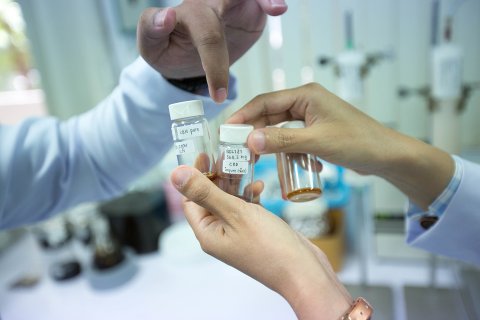
Cannabinoid extracts have been approved in Thailand.Guillaume Payen/SOPA Images/LightRocket/Getty
What's in the bottle?
With
CBD products, it's hard to be sure what you're getting. THC aside, most
companies boast of offering "broad spectrum" or "full spectrum" CBD
products, which means other ingredients from hemp plants end up in the
mix besides CBD. There are in fact hundreds of compounds in hemp falling
into a variety of categories with names like cannabinoids, terpenes and
flavonoids.
Many consumers are already sold on the notion of "the
entourage effect"—the scientifically unsubstantiated, though not
entirely implausible, claim that the different ingredients somehow
combine to provide health benefits that go beyond what any of the
individual components might do.
But good luck sorting out which of those
ingredients are actually present in a given CBD product and in what
quantities. "'Full spectrum' is a meaningless marketing term," says
Tagen. "It's rare that any of these companies actually test for these
ingredients and even rarer that they release the results."
In
fact, it's hard for consumers to know much of anything about what they
might be getting when they buy a CBD product. "Some of these companies
have zero science behind what they're doing," says Karyemaître Aliffe a
Seattle-based physician and pharmaceutical researcher who runs a small
biotech company and teaches at the University of Miami Medical School.
"The quality control and regulatory oversight for CBD is not much beyond
what it is for Snickers bars."
Studies have indicated CBD
products from some established vendors can have CBD levels well below or
above what's claimed on the label, along with illegally high levels of
THC and contaminants including heavy metals and pesticides. The hemp
plant tends to pull in whatever lies in the soil and hang onto it, so
unless the soil or resulting products are carefully tested—still not the
case for many CBD products, especially those imported into the U.S.
rather than grown and produced here—there may be risks for any number of
toxins.
For what it's worth, vendors like Bluebird, Veritas and
Heavenly Rx insist they have rigorous quality-control and testing
programs in place and enlist independent firms to analyze and certify
their products.
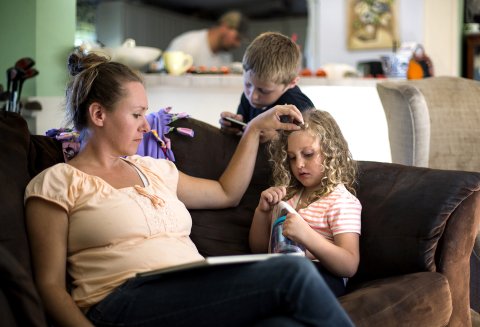
Samantha Brown’s daughter Kaylee,
5, depends on a cannabis oil to manage seizures. Millions of people now
use CBD to treat themselves, their children or their pets. So far, the
FDA has approved CBD only for two forms of epilepsy, but the substance
is widely considered to be safe.Getty/Derek Davis/Portland Press Herald
But even if you knew exactly what is in the bottle, is there
enough of it to do you any good? There's little understanding of CBD
dosages at this point, but what scientists do know suggests the amounts
normally advertised as a typical dose are probably well below what's
needed to make a big dent in a health problem. The rare childhood
epilepsies—the one condition considered proven to be treatable with
CBD—are treated with daily doses in the range of 500 milligrams, or
about a sixtieth of an ounce—and that's for children. The standard
recommended adult dose of over-the-counter CBD oil is an
eyedropper-full, typically amounting to between a fiftieth and a
hundredth as much CBD as the child-epilepsy dose. It wouldn't be
advisable to take hundreds of milligrams a day—that would require
chugging a whole bottle—outside of a doctor's care, but anyone who did
would likely be paying more than a thousand dollars a month for the
habit.
Cecilia Hillard, director of the Neuroscience Research
Center of the Medical College of Wisconsin, and one of the U.S.'s more
prominent CBD researchers, says that she's encountered people who
actually take such large over-the-counter doses and who do in fact
report higher levels of relief from such problems as neuropathic pain.
But one big hitch, notes Hillard, is that at doses that large, many CBD
products would be delivering enough THC along with it to provide a bit
of a high and that's more likely where the relief is coming from. "Even
at high doses, the effects of CBD itself tend to be mild," she says.
Human studies of CBD using purified and tested versions of CBD with
little or no THC have shown effectiveness against acute anxiety, but
they use single doses in the range of 300 milligrams—dozens of times
larger than what a typical consumer takes. If CBD vendors were to
recommend such high doses, it would raise concerns about
as-yet-undiscovered side effects. And it prices CBD treatment out of the
reach of most consumers.
Tongue vs gut vs clinical trials
Adding
to the uncertainties over CBD's effectiveness is the variation in how
it gets into the bloodstream, which is where it has to go to do any
good. Smoking and vaping are relatively efficient ways to take it—they
deliver about half of the CBD in a dose to the bloodstream in seconds.
But they carry health risks similar to smoking and vaping tobacco.
Placing a tincture under the tongue and holding it there for a minute
delivers about 20 percent of the CBD, with a delay of a few minutes.
Swallowing CBD is the least efficient of all—only 10 percent makes it
into the bloodstream because liver enzymes break CBD down in the gut—and
what does make it through can take two hours to reach your blood.
Eating fatty foods helps, because CBD dissolves in fat and is thus more
easily absorbed in the gut before being broken down. But that doesn't
bode well for consumption via fat-free beer or soda. "You'd end up with
vanishingly small amounts in your body," says Hillard. "I can't imagine
that little doing anything at all."
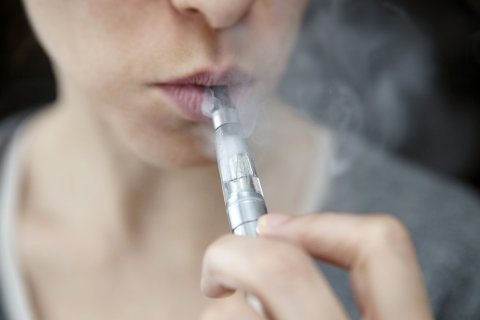
One hazard of an unregulated
industry is that consumers can’t be sure what dosage they’re getting. A
lot also depends on the method used for taking the CBD. Vaping delivers
about half the CBD to the bloodstream in seconds, but carries some
health risks.Getty/BSIP
That makes taking CBD under the tongue—so-called sublingual
consumption—a winner in many experts' and aficionados' minds. But you
won't see that recommended on your bottle of CBD oil.
That's partly
because many consumers don't like the oily, grassy-tasting stuff pooling
around their mouths. It's also because the FDA doesn't allow unapproved
references to sublingual dosing, considering it a drug-delivery
mechanism. "Under the tongue is my personal preference," says Alexander
Salgado, CEO of Veritas Farms, "but I can't say that on a label until
the FDA provides some clarity." If the FDA relents on that score,
Salgado predicts there'll be a big market for CBD-saturated strips that
dissolve under the tongue.
Chewing gum could hit another
sweet-spot. Axim Biotechnologies, which has patents on gum-based drug
delivery and FDA approval, is selling gum with 10 milligrams of CBD. "A
chemotherapy patient can chew a piece and get immediate relief," claims
Axim CEO John Huemoeller.
The company will soon introduce a line of
mass-market "wellness" gums that mix CBD with caffeine, ginseng,
melatonin, tryptophan (the ingredient in turkey that supposedly makes
everyone sleepy after Thanksgiving dinner) and other ingredients. It's
also starting clinical trials of toothpaste and mouthwash that will aim
CBD's claimed anti-bacterial and anti-inflammatory properties against
gingivitis and periodontitis.
Researchers are now fashioning clinical trials to learn
which patients can be helped by what form of CBD. More than 500 trials
are in the works around the world, says Hillard, fueled partly by
startups already profiting from CBD. One firm, Kannalife Sciences, is
designing clinical trials for treating chemotherapy side effects, liver
disease, chronic skin conditions, non-Parkinson's tremors and even stage
IV cancers. "At stage IV you have to hit the cancer with a
sledgehammer," says CEO Dean Petkanas. "We want to transfuse 10,000
milligrams of CBD into bone marrow to see if it reduces the
proliferation of cancer cells."
Researchers will have to ply the
scientific method through hype-roiled waters for years. In the meantime,
doctors, scientists and consumers will have to feel their way.
"Cannabinoid therapeutics is a completely new frontier," says Petkanas.
"We're just where antibiotics were in the 1930s."
A new study shows that active cannabis users who were
undergoing fertility treatment were more than twice as likely to suffer
terminated pregnancies.
By Brendan Bures, The Fresh Toast
A recent study finds marijuana has a negative effect on women undergoing fertility treatment.Getty Images
The science behind using marijuana and pregnancy is mixed. What we do know is that marijuana and pregnancy is mixing in unprecedented ways. Reports like this one from the JAMA Network Open journal
indicates that women using cannabis in the year before pregnancy is
significantly on the rise. In addition, women using cannabis while
pregnant jumped a bit as well over the past 10 years.
New research from the Human Reproduction journal shows,
however, that marijuana does have a negative effect on women undergoing
fertility treatment. Dr. Jorge E. Chavarro and his team monitored more
than 400 women who were receiving treatment with assisted-reproduction
technology (ART).
The small percentage of these women who smoked
marijuana while undergoing the ART treatment were more than twice as
likely to lose a pregnancy when compared to those who didn’t use
cannabis, or only reported use in the past.
But
Chavarro and his team also discovered a surprising caveat to their
analysis. Among the couples where the man was the only active cannabis
user, women were significantly more likely to have a baby. Whether this
is indicative of a larger trend, Chavarro couldn’t say.
“The
bottom line remains that we know way too little about the reproductive
health effects of marijuana,” Chavarro told Reuters. “The scarcity of
information is particularly concerning given the concurrent trends of
expanded legalization, increased perception that marijuana poses no
health hazards and increased consumption among men and women of
reproductive age, including among pregnant women.”
The
study followed 421 women who underwent 730 ART cycles at a Boston
fertility center between 2004 and 2017. Among these, 200 of their male
partners also enrolled in the study. Marijuana use was self-reported
among the couples, with 44 per cent of the women and 61 per cent of the
men admitted to ever consuming cannabis. At the time of enrollment, 3
per cent of the women were active cannabis users as were 12 per cent of
the men.
Among those women, 54 per cent of the marijuana smokers
and 26 per cent of non-users endured pregnancy loss while 317 women had a
positive pregnancy blood test. Nine of those women were marijuana
users. But for those couples that had a male partner as the only active
cannabis users, 48 per cent experienced successful pregnancies as did 29
per cent of the couples with a non-cannabis-smoking male partner.
Researchers at Arizona State University (ASU) are reporting that nearly 25 percent of teenagers in Arizona have tried cannabis concentrate, a highly potent form of marijuana.
The study was focused on
nearly 50,000 8th, 10th, and 12th graders who participated in the 2018
Arizona Youth Survey. Overall, 33 percent of the teens had tried
marijuana in some form, while 24 percent had tried marijuana
concentrate.
Marijuana concentrates have
about three times more THC, the main mind-altering compound, compared to
what is found in the plant naturally. Professor Madeline Meier, the
study’s lead researcher, said that this is concerning because higher
doses of THC have been linked to increased risk of marijuana addiction,
cognitive impairment, and psychosis.
Compared to adolescents who
had tried only traditional marijuana, those who tried concentrates were
found to have more risk factors for addiction, such as lower perceived
risk of harm, peer substance use, and parental substance use.
“This is important because it
shows that teens who have a diverse array of risk factors for developing
marijuana addiction may be further amplifying their risk for addiction
by using high-THC marijuana concentrates,” explained study co-author
Professor Dustin Pardini.
The study also revealed that
teens who had used concentrates had much higher rates of e-cigarette
use. According to Professor Meier, one explanation for this could be
that teens are using e-cigarettes to vape marijuana concentrate.
Previous studies have shown
that some teenagers use e-cigarettes to conceal their marijuana use.
“Vaping marijuana can be passed off as nicotine vaping,” said Professor
Meier.
Marijuana concentrates do not look like traditional marijuana, and some products resemble wax or oil.
“What concerns me most is that
parents might have no idea that their child is using marijuana,
especially if their child is using marijuana concentrate,” said
Professor Meier. “Marijuana is not harmless, particularly for
adolescents.”
Earlier work by Professor
Meier identified a link between frequent marijuana use throughout
adolescence and reduced intelligence scores. In addition, prior research
by Professor Pardini found that teenagers who use marijuana regularly
are more likely to develop persistent subclinical psychotic symptoms.
Government wants to have concept plans for the development of the
hemp and dagga sector in place by October, especially considering the
potential the industry could hold for job creation, says Busani
Ngcaweni, the head of policy and research in the presidency.
This
is one of the economic sectors in which concept master plans are being
developed because there is enough evidence to show that jobs will be
created, especially in rural areas, said Ngcaweni at a conference in
Sandton last week.
The plans are to be modelled on the success of
government’s development and support programme for the vehicle
manufacturing sector since 1995, which is regarded as one of the most
important interventions in industrial policy.
The plans for
various economic sectors, including textiles, sugar and downstream
activities in the steel industry, will form part of government’s second
investment summit, which is scheduled to be held in November, said
Ngcaweni.
According to
international experts, South Africa’s dagga industry could be worth more
than $7.1 billion (R107 billion) if legislation to legalise one of the
continent’s biggest markets is passed.
Prohibition Partners,
which works to unlock community and commercial opportunities in the
cannabis industry based on reliable data and research, said South Africa
and Nigeria had the potential to become the continent’s highest value
markets, worth $667 million and $75 million, respectively, by 2023 if
the use of dagga is permitted for medicinal and recreational use.
This
information is contained in the African Cannabis Report, the first
detailed report on the legal dagga industry in Africa. The report also
covers the benefits for the continent should the legalisation be passed.
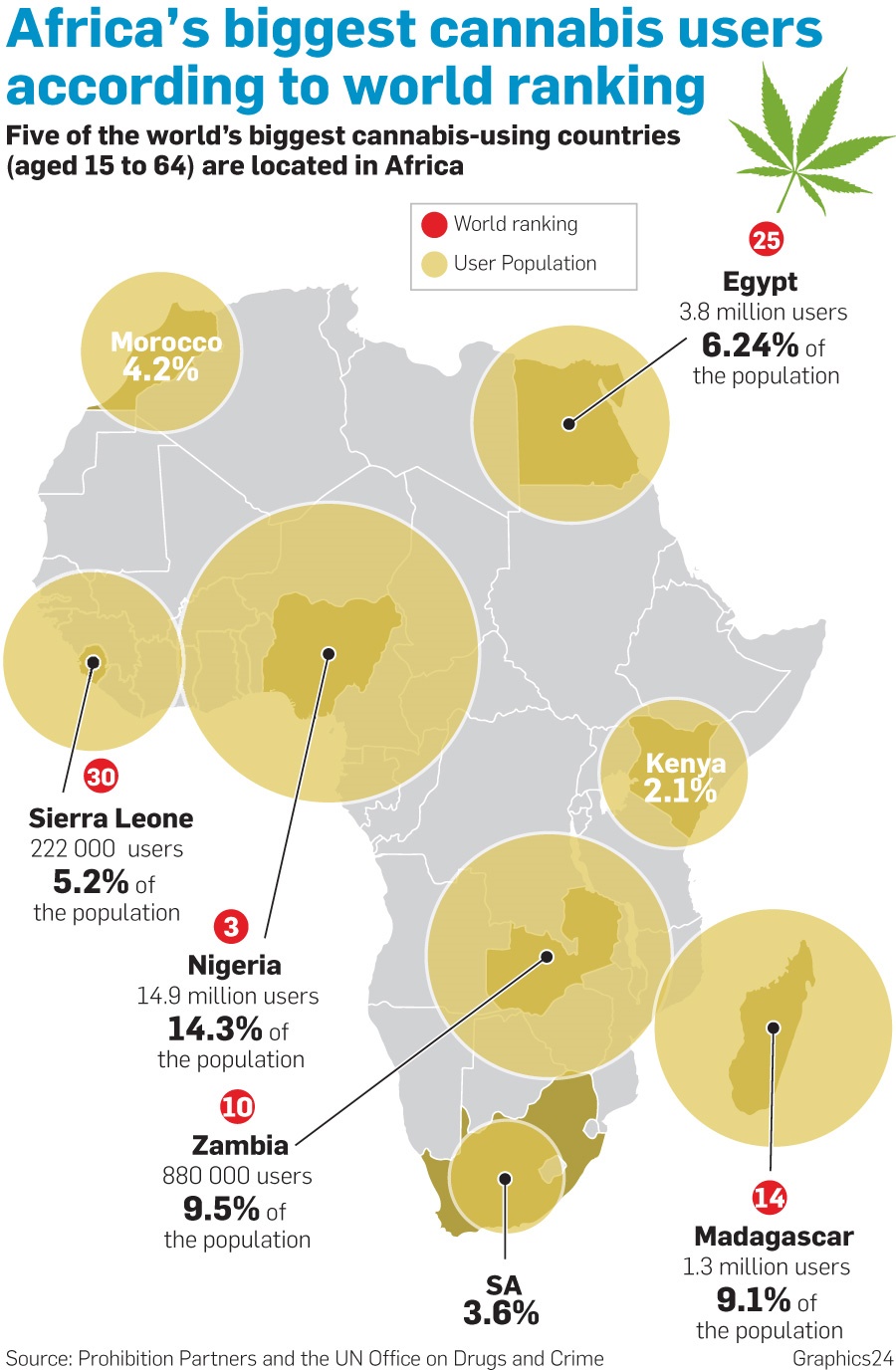
According to the report, which was published in March, five of
the world’s 30 biggest dagga-consuming countries (in the age group of 15
to 64) are in Africa. These are Nigeria, Zambia, Egypt, Madagascar and
Sierra Leone.
The report indicates that the World Health
Organisation estimates that South Africa is the third-largest dagga
producer in the world, with an estimated 900 000 dagga farmers. This is
above and beyond the estimated 350 000 traditional healers who cultivate
dagga.
South Africa is also considered to be a country that has a
suitable climate for the cultivation of dagga, especially in the
Eastern Cape and KwaZulu-Natal.
According to landbou.com, the Agricultural Research Council is ready to cultivate its hemp cultivars commercially.
Trial runs worked best in the Eastern Cape and in the Western Cape.
According to world rankings, some of Africa's biggest cannabis users include these countries.
The
guidelines for the commercialisation of hemp in South Africa need to be
approved by government, and public consultation must also take place,
landbou.com reported last week.
Hemp and marijuana are varieties of the species Cannabis sativa.
Marijuana
refers to the plant that is cultivated for its high levels of
tetrahydrocannabinol (THC), which is responsible for the psychoactive
effect of dagga. Hemp refers to a plant that is typically cultivated for
industrial use, such as oils, fibre or clothes. Hemp has a very low THC
concentration.
Prohibition Partners refers to a report from the
UN, which estimates that South Africa’s annual dagga production is at
about 2 500 tons and can still increase. The South African Health
Products Regulatory Authority recently approved the first licence for
the cultivation of medicinal dagga.
In September, the Constitutional Court legalised the growing of dagga for private use by adults in private settings.
According
to Mzukisi Qobo, an associate professor at Wits Business School, and
Wandile Sihlobo, chief economist at the Agricultural Business Chamber of
SA, many African governments have relaxed regulations and laws
governing the use of dagga to help stimulate rural development and
create jobs.
In an article that originally appeared in Daily
Maverick in July, they write that, in 2017, Lesotho became the first
African country in which dagga was decriminalised. The first production
licence was granted last year.
However, Qobo and Sihlobo say that licensing in many African countries is a long and costly process.
In Lesotho, a licence costs close to R500 000 and must be renewed yearly at a cost of R130 000.
In South Africa, licensing fees will have to be lower to ensure economic inclusivity.
Prohibition
Partners said data from New Frontier estimated that South Africa had a
$1.2 billion market for cannabis and related products.
In
addition to low-income consumers, there is also potential at the upper
end of the market for edibles (such as cannabis pizza), dagga-infused
drinks, essential oils, medicinal cannabis and textiles.
The
organisers of the fourth cannabis expo in South Africa, which will be
held in Sandton in November, said that, as a result of the growing dagga
industry in Africa, there is increasing interest among international
cannabis companies to exploit opportunities on the continent.
In
Lesotho, the growth prospects after legalisation have already led to an
influx of foreign investment, according to Prohibition Partners.