Saturday, 7 March 2015

Authoritative national survey shows majority favor marijuana legalization


Support is up 9 percentage points from 2012, the last time the General Social Survey was conducted.

For the first time, the General Social Survey — a large, national survey conducted every two years and widely considered to represent the gold standard for public opinion research — shows a majority of Americans favoring the legalization of marijuana.
In interviews conducted between March and October of last year — when the legal marijuana markets in Colorado and Washington were ramping up — researchers asked 1,687 respondents the following question: “Do you think the use of marijuana should be made legal or not?”

Fifty-two percent said pot should be legalized, 42 percent opposed it, and another 7 percent were undecided. Support is up 9 percentage points from 2012, the last time the survey was conducted.

The GSS marijuana numbers trace the trajectory of U.S. drug policy over the past 40 years. In 1974, a year after the Shafer Commission recommended removing marijuana from Schedule 1 of the Controlled Substances Act, public support for full legalization stood at 19 percent. Support rose through the 1970s, reaching nearly 30 percent in 1978, only to plummet during the Reagan years, “Just Say No” and the advent of the drug war.

The year 1990 represented the nadir of legalization support, when it stood at 16 percent. But the numbers rose steadily through the 1990s as states began adopting medical marijuana laws, starting with California in 1996. As recently as 2006, support stood only at 32 percent — just a little bit higher than the previous peak in 1978. In the fewer than 10 years since then, support has jumped 20 percentage points — mirroring, in many ways, the dramatic shift in public opinion on gay marriage over the same period.

Legalization supporters have been able to capitalize on that energy and secure full legalization in four states, with a partial legal status in DC similar to the Schafer Commission’s original recommendation. Opponents have scrambled to catch up, but the sharp and sustained increase in public opinion means they’re facing an uphill battle. That fact that they’ve been drastically outspent at every turn — partially a reflection of greater public support for the pro-legalization camp — hasn’t helped things.

Still, after repeated losses at the ballot box legalization opponents are now turning toward the courts. The attorneys general of Nebraska and Oklahoma have filed suit against Colorado. Former DEA administrators and a DC-based tough-on-crime group advocating for harsher prison sentences have also rallied to the cause. Additional state-level lawsuits may be coming soon.

For a public increasingly weary of the toll of decades of costly and ineffective drug policies, these cases will be a tough sell. Younger Americans — including Republican ones — overwhelmingly favor marijuana legalization. And after a year of legal pot, Colorado doesn’t appear to be experiencing buyer’s remorse. A recent Quinnipiac poll found that 58 percent of Colorado’s voters said they supported the state’s marijuana law — slightly more than the 55 percent who approved it in 2012.

The strong numbers in the latest General Social Survey indicate that the issue isn’t losing salience with the public. At the national level, support for legal marijuana remains robust — and doesn’t show signs of wavering any time soon.

Authoritative national survey shows majority favor marijuana legalization


Friday, 6 March 2015

Marijuana May Trigger Allergies in Some People


Just like ragweed and birch trees, marijuana plants may trigger allergic reactions in some people, according to a new review of previous studies.
And because of the increasing use and cultivation of marijuana that has followed in the wake of legalization in some places, allergies to marijuana may be on the rise, experts say. People can be allergic to the plant's pollen, or to its smoke.

"Although still relatively uncommon, allergic disease associated with [marijuana] exposure and use has been reported with increased frequency," wrote the authors of the review, published March 3 in the journal Annals of Allergy, Asthma & Immunology.
In fact, allergies to marijuana have likely gone underreported, because of marijuana's illegal status, said Dr. Purvi Parikh, an immunologist of the Allergy & Asthma Network, a nonprofit organization that promotes allergy research and education.

"Now as the prevalence [of marijuana use] is increasing, and with the legalization in many states, it is going to become increasingly more common, and all these cases will surface that were not recognized before," Parikh said.
People who are allergic to the marijuana plant's pollen or smoke may get symptoms such as a runny nose, inflammation of the nasal passages, and coughing and sneezing, according to the review. Some people who have touched marijuana have developed hives, and itching and swelling around the eyes.

There have also been reports of asthma triggered by exposure to its pollen, according to the review.
One patient who ate hemp seed-encrusted seafood experienced the severe allergic reaction called anaphylaxis, which affects the whole body and is potentially fatal, according to the review. (The man's doctors later excluded the seafood as the cause of his allergic reaction through testing.) In another case mentioned in the review, a person who used marijuana intravenously also experienced anaphylaxis.

Some people have experienced allergic reactions while handling marijuana at work, according to the review. A bird breeder developed allergy symptoms after feeding hemp seeds to his birds, and one unlucky medical marijuana grower, who previously was able to smoke pot recreationally, suddenly developed hives and itching after handling the plant.
For some marijuana users, it is not only the plant itself that may cause an allergic reaction. Pot can become very moldy when it is being stored, and people who are allergic to mold may have reactions, Parikh said.
Some people could even experience reactions to both the plant and mold, as many people with allergies are allergic to multiple substances, she said.

The review pointed out two studies conducted decades apart in Omaha, Nebraska, where the Cannabis plant grows widely and is cultivated commercially. In the studies, researchers looked at how common cannabis allergies were among people in the area. In the first study, published in 1940 in the Nebraska Medical Journal, researchers found that 22 percent of 119 patients with allergy symptoms were allergic to hemp pollen.

In the later study, published in 2000 in the journal Annals of Allergy, Asthma & Immunology, investigators found that 61 percent of 127 patients with allergies in Omaha were allergic to hemp, according to the report.
People who live in areas where large quantities of marijuana plants are grown may be particularly prone to experiencing allergic reactions to the pollen, Parikh said. "The quantity makes a big difference in the prevalence of allergies."

Wednesday, 4 March 2015

San Diego Scientist: Every Medical Pot Study Showed A Benefit To The Patient

When voters passed Proposition 215 in 1996, California became the first state to legalize medical pot. There was only one problem. Scientists still hadn't firmly established marijuana's effectiveness as medicine.

"It's completely incongruous that it's sitting in schedule one with other useless, dangerous drugs," says one of the few U.S. scientists who has had the chance to research marijuana in-depth.
Some state legislators wanted to change that. They approached UC San Diego psychiatrist Igor Grant.
"My recommendation was, look, establish a center to study this," said Grant, who'd previously looked into whether moderate marijuana use causes long-term brain damage (conclusion: it doesn't).

"It'll cost you some money but these studies have not been done before," he told the legislators.
Soon, Grant found himself in charge of the new state-funded Center for Medicinal Cannabis Research.
It was an enviable position. Many scientists in the United States would love to do experiments using pot, but it's been incredibly difficult to study. The Drug Enforcement Administration lists marijuana as a schedule one drug alongside heroin and ecstasy.

It's a category reserved for drugs with "no currently accepted medical use." Grant said his work challenging that assumption wouldn't have been possible without Sacramento fully behind him.
"Without the state of California saying, 'Yes, we support this work,' we probably would've never gotten federal approval," Grant said.

Grant worked with scientists throughout the UC system to complete a series of small human trials. They sourced their samples from the only federally sanctioned grow operation, a pot farm at the University of Mississippi.
"It would be a joint basically," Grant said. "But very professionally rolled, I might say. It looked like a cigarette."
UC San Diego psychiatrist Igor Grant pictured in his office, Feb. 13, 2015.
The joints all looked and smelled the same, but not all of them got subjects high. These studies required placebos, so some joints contained no THC, sort of like the pot version of decaf coffee. Grant had to convince DEA agents these samples would not leave the lab.

"The DEA has to come locally and say, 'Where are you going to store it? Let's look at your research pharmacy,'" Grant said. "In one case they said, 'Is that safe bolted to the floor?'"
Subjects smoked their joints in hermetically sealed rooms with no ventilation leading toward non-participants who might unwittingly inhale stray fumes.
Grant and his colleagues had to jump through lots of regulatory hoops to pull off the experiments. But once they were done, the findings surprised him.

"I kind of expected, well, we're going to have a few studies that say yes and a few that will say no, and then at the end of the day we'll still be arguing," Grant said. "But in fact every single study showed benefit."
Grant said it's now well-established that marijuana can soothe neuropathic pain in patients with diseases like HIV/AIDS. It can reduce spasticity in multiple sclerosis. And — perhaps obviously — it can stimulate appetite in underweight patients.

Grant said more research is needed before reaching conclusions about marijuana's usefulness with other diseases, like epilepsy and schizophrenia. He also admits some purported uses have little to no scientific support. But taken altogether, Grant says there's now more than enough evidence to justify rescheduling marijuana.

Other scientists agree. The American Academy of Pediatrics recently called for rescheduling. Even U.S. Surgeon General Vivek Murthy has acknowledged marijuana can be helpful in treating certain conditions.
Alex Kreit, a professor at the Thomas Jefferson School of Law, said learning more about pot will be difficult without rescheduling.

"It makes it very hard for researchers to get access," Kreit said. "There are a whole host of hurdles that schedule one drugs come with, as far as research, that schedule two, three and so forth simply don't have."
DEA spokesperson Rusty Payne said the agency can't reschedule marijuana on its own.
"Until Congress acts or the FDA says it's a medicine, there's nothing we can do," he said.

As for harms, Grant says the jury's out on how marijuana can affect teenage brains still under development. But he's seen no clear evidence of long-term damage in adults.
Grant said, "It's completely incongruous that it's sitting in schedule one with other useless, dangerous drugs."
Grant said marijuana belongs in schedule three, alongside small doses of codeine and some appetite suppressants. But he'd settle for schedule two.

Mixing tobacco and marijuana may seem like a good idea, but here's the dangerous truth about blunts

People who smoke a combination of tobacco and marijuana, a common practice overseas for years, and increasingly popular here in the form of "blunts," may be reacting to some unidentified mechanism that links the two drugs.
Researchers believe such smokers would be well advised to consider giving up both drugs at once, rather than one at a time, according to an upcoming study in the journal Addiction.

Clinical trials of adults with cannabis use disorders suggest that "approximately 50% are current tobacco smokers," according to the report, which was published in the journal Addiction, and authored by Arpana Agrawal and Michael T. Lynskey of Washington University School of Medicine, with Alan J. Budney of the University of Arkansas for Medical Sciences.

"As many cannabis users smoke a mixture of cannabis and tobacco or chase cannabis use with tobacco, and as conditioned cues associated with smoking both substances may trigger use of either substance," the researchers conclude, "a simultaneous cessation approach with cannabis and tobacco may be most beneficial."

A blunt is simply a marijuana cigar, with the wrapping paper made of tobacco and the majority of loose tobacco removed and replaced with marijuana. In Europe, smokers commonly mix the two substances together and roll the combination into a single joint, the precise ratio of cannabis and nicotine varying with the desires of the user.

“There is accumulating evidence that some mechanisms linking cannabis and tobacco use are distinct from those contributing to co-occurring use of drugs in general,” the investigators say. Or, as psychiatry postdoc Erica Peters of Yale put it in a press release, "There's something about tobacco use that seems to worsen marijuana use in some way."

The researchers believe that this "something" involved may be a genetic predisposition. In addition to an overall genetic proclivity for addiction, do dual smokers inherit a specific propensity for smoked substances? We don't know—but evidence is weak and contradictory so far.
blunt 
Flickr/Torben Hansen
Wouldn't it be easier to quit just one drug, using the other as a crutch? The researchers don't think so, and here's why:
In the few studies available, for every dually addicted participant who reported greater aggression, anger, and irritability with simultaneous cessation, "comparable numbers of participants rated withdrawal associated with dual abstinence as less severe than withdrawal from either drug alone." So, for dual abusers, some of them may have better luck if they quit marijuana and cigarettes at the same time. The authors suggest that "absence of smoking cues when abstaining from both substances may reduce withdrawal severity in some individuals."

In other words, revisiting the route of administration, a.k.a. smoking, may trigger cravings for the drug you’re trying to quit. This form of "respiratory adaption" may work in other ways. For instance, the authors note that, "in addition to flavorants, cigarettes typically contain compounds (e.g. salicylates) that have anti-inflammatory and anesthetic effects which may facilitate cannabis inhalation."

Studies of teens diagnosed with cannabis use disorder have shown that continued tobacco used is associated with a poor cannabis abstention rate. But there are fewer studies suggesting the reverse—that cigarette smokers fair poorly in quitting if they persist in cannabis use. No one really knows, and dual users will have to find out for themselves which categories seems to best suit them when it comes time to deal with quitting.

We will pass up the opportunity to examine the genetic research in detail. Suffice to say that while marijuana addiction probably has a genetic component like other addictions, genetic studies have not identified any gene variants as strong candidates thus far. The case is stronger for cigarettes, but to date no genetic mechanisms have been uncovered that definitively show a neurobiological pathway that directly connects the two addictions.

There are all sorts of environmental factors too, of course. Peer influences are often cited, but those influences often seem tautological: Drug-using teens are members of the drug-using teens group. Tobacco users report earlier opportunities to use cannabis, which might have an effect, if anybody knew how and why it happens.

Further complicating matters is the fact that withdrawal from nicotine and withdrawal from marijuana share a number of similarities. The researchers state that "similar withdrawal syndromes, with many symptoms in common, may have important treatment implications." As the authors sum it up, cannabis withdrawal consists of "anger, aggression or irritability, nervousness or anxiety, sleep difficulties, decreased appetite or weight loss, psychomotor agitation or restlessness, depressed mood, and less commonly, physical symptoms such as stomach pain and shakes/tremors." Others complain of night sweats and temperature sensitivity.

And the symptoms of nicotine withdrawal? In essence, the same. The difference, say the authors, is that cannabis withdrawal tends to produce more irritability and decreased appetite, while tobacco withdrawal brings on an appetite increase and more immediate, sustained craving. Otherwise, the similarities far outnumber the differences.

None of this, however, has been reflected in the structure of treatment programs:
"Emerging evidence suggests that dual abstinence may predict better cessation outcomes, yet empirically researched treatments tailored for co-occurring use are lacking."
The truth is, we don't really know for certain why many smokers prefer to consume tobacco and marijuana in combination. But we do know several reasons why it's not a good idea. Many of the health-related harms are similar, and presumably cumulative: chronic bronchitis, wheezing, morning sputum, coughing—smokers know the drill. Another study cited by the authors found that dual smokers reported smoking as many cigarettes as those who only smoked tobacco.

All of this can lead to "considerable elevation in odds of respiratory distress indicators and reduced lung functioning in those who used both." However, there is no strong link at present between marijuana smoking and lung cancer.
Some researchers believe that receptor cross-talk allows cannabis to modify receptors for nicotine, or vice versa. Genes involved in drug metabolism might somehow predispose a subset of addicts to prefer smoking. But at present, there are no solid genetic or environmental influences consistent enough to account for a specific linkage between marijuana addiction and nicotine addiction, or a specific genetic proclivity for smoking as a means of drug administration.

Tuesday, 3 March 2015

Drugged Drivers Blow; The Evolution of the Marijuana Breathalyzer is Underway

With the advent of legalizing marijuana for recreational use by Colorado and Washington in 2014 and a growing trend to legalize pot in some capacity across the nation, there is an increased interest in addressing drugged driving. The problem is that standardizing policy for marijuana intoxication is not as simple as just piggybacking long-established laws for alcohol; more science and research are required.

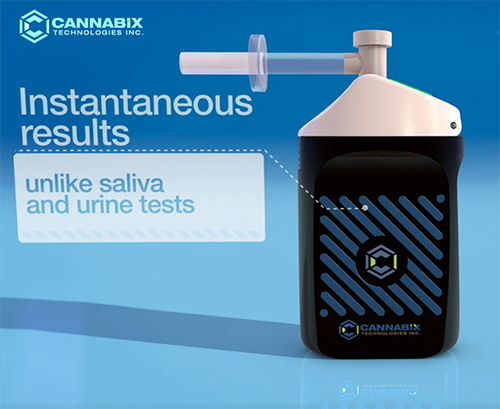
In the meantime, technology will be coming to market, such as the marijuana breathalyzer being developed by Cannabix Technologies, Inc. (OTC: BLOZF)(CSE: BLO), to give police officers an on-site tool to enhance detection of THC, the psychotropic metabolite in marijuana. In the future, devices of this type will likely be dialed in by the forensic community and become an integral element in identifying marijuana-intoxicated drivers and in other settings, including workplaces and general consumer use, just as the alcohol breathalyzer is today.

All Blood is Not Drugged Equally
For starters, alcohol affects a person on a first time bender and a hardened alcoholic in a very similar manner, making breathalyzers reliable in determining blood alcohol content as evidence to related laws. Indeed, tolerance and some physical attributes play a role in alcohol effecting a person, but decades of research support that a blood alcohol level of 0.08 or above impairs motor and cognitive skills sufficiently in any person to make them a danger behind the wheel, thus it is the benchmark for DUI in every state.

Research on the effects of THC, however, has uncovered mixed results on impairment underpinned in part by the frequency of pot usage, dissemination of THC throughout the body and metabolism times, churning debate over DUI laws pertaining to marijuana. Controversial or not, driving under the influence of marijuana is still illegal in every state, including many with zero tolerance, or “per se,” laws.

The Drug Recognition Expert
There is an increasing number of “Drug Recognition Experts,” police officers that go through intensive (and expensive) training for certification to administer a battery of tests to identify people under the influence of different drugs. Governed by the International Association of Chiefs of Police, DRE programs are utilized in both the U.S. and Canada, although the overall number of DREs is relatively low, numbering 6,940 in the U.S. (compared to nearly half a million sworn police officers) and only 480 in Canada at the end of 2012.

DRE evidence has been challenged several times in the States on its scientific merit, with mostly limited success, and precedents are set. Even with more DRE’s, police forces are still in need of an equivalent to the alcohol breathalyzer for marijuana, a ubiquitous device that can provide non-DRE police with some immediate evidence of drivers under the effects of THC so that the person may be further evaluated.

Remember in establishing policy for impaired driving under the effects of alcohol, police were first left to subjective opinions of physical observations, such as the smell of alcohol on the suspect’s breath or slurred speech. Blood tests worked to show inebriation, but it was groundbreaking work by Dr. Emil Bogen that helped set the stage for modern technology and alcohol breathalyzers that are a standard in law enforcement.

The Cannabix Breathalyzer
The point here is that the genesis of drunk driving standards followed a path from subjectivity to science and marijuana policy is heading down the same route, a fact that doesn’t seem to have eluded Kal Malhi, President of Cannabix Technologies and a retired member of the Royal Canadian Mounted Police. Malhi is also the founder of Cannabix Breathalyzer, Inc., the company that has licensed 100% of the exclusive North American rights to Cannabix Technologies, effectively giving the broad investment community an opportunity to invest in the expanding marijuana market, including investors uninterested in advocating for the harvest and sale of marijuana, albeit medicinal or recreational.

Cannabix has been making steady progress in the development of its Cannabix Breathalyzer. A month after it announced that the prototype’s “mechanical design, circuit board layouts, firmware, and printed circuit board designs all nearing completion.”, it announced the completion of an alpha version of the marijuana breathalyzer. Management plans on evaluating the efficacy of this prototype on medical marijuana users, as well as making additional improvements to the device for use as a roadside or workplace drug impairment tool. In the next beta version, the company will likely begin testing the device with independent agencies to further evaluate the devices utility in the field.

Technology Critical to Police
Technology plays a critical role in law enforcement to protect the public and police officers. This is an expansive arena, including products such as those manufactured by Taser International (NASDAQ: TASR)(not just their eponymous non-lethal weapons, but also their body cameras, etc.), biometric solutions by companies like Aware, Inc. (NASDAQ: AWRE)(which posted a 41% jump in revenue through the first 9 months of 2014 compared to a year earlier), firearms training simulators by VirTra Systems (OTC: VTSI) and much more.

Although it has been illegal all along to drive under the influence of marijuana, the decriminalization of cannabis has put a spotlight on drugged driving; expect technology to provide the requisite tools in this application as well to help police and the justice system try to keep a thumb on crime.
Recently, CTV National News profiled Cannabix Technology’s Marijuana Breathalyzer, highlighting its promise for law enforcement:
For more information about Cannabix Technologies, visit the company’s website at http://www.cannabixtechnologies.com/.
About CannabisFN
Cannabis Financial Network (CannabisFN) is brought to you by TDM Financial, a financial media group and owner of SECFilings.com with over a decade of experience educating investors, profiling public companies, and developing specific investors audiences. CannabisFN is the largest dedicated financial network covering the cannabis and medical marijuana (MMJ) industries and educates investors, business developers and media on industry news, thought leader and executive perspectives, and the fluid regulatory environment while serving as a leading corporate communications platform to public and private companies operating in the industry.

Monday, 2 March 2015

EXPLAINED: The new Drug-Driving Law to hit UK today

NEW ROADSIDE tests to identify people driving under the influence of drugs are to be rolled out across the UK today.


The new legislation will allow police officers to test drivers for traces of drugs for the first time.
Officers will no longer have to prove a driver was too impaired to drive – only that they had an illegal level of drugs in their system.
The new drive – coupled with new DrugWipe testing kits – allows police to test motorists for substances in less than 10 minutes using only a swab taken from inside a driver's cheek.

DrugWipe allows officers to screen drivers for cannabis and cocaine at the roadside.
The change in the law will make it quicker and easier for drug-drivers to be prosecuted.
British motorists who get behind the wheel with illegal drugs – or illegal quantities of legal medication – in their system could face a year in prison and a fine of up to £5,000.
Driving under the influence of drugs is extremely dangerous ... This new law will save lives
Road Safety Minister Robert Goodwill
In addition, police will be able to test for other drugs including ecstasy, LSD, ketamine and heroin at a police station, even if a driver passes the roadside check.
New research conducted by THINK! has revealed that more than half of those who admitted to driving under the influence of illegal drugs said they felt safe behind the wheel.
In addition, 60per cent revealed they had previously driven a car when they were unsure if they were still under the influence of illegal drugs.

Road Safety Minister Robert Goodwill said: "This new law will save lives.
"We know driving under the influence of drugs is extremely dangerous; it devastates families and ruins lives.
"The government’s message is clear - if you take drugs and drive, you are endangering yourself and others and you risk losing your licence and a conviction."
The new testing kits only require a quick swab from inside the motorist's cheek  
THINK•PH
The new testing kits only require a quick swab from inside the motorist's cheek
Dr Kim Wolf, of King’s College London who has acted as an advisor for the Government drug drive policy, said: "It is worrying to note that so many drug drivers said they felt safe to drive after taking illegal drugs.
"Illegal drugs seriously impair skills required to drive safely, such as reaction time and decision making.
"In many cases those who take certain illegal drugs believe that they are safe to drive, but are in fact putting themselves and others at risk.”

The law also includes eight drugs commonly associated with medicinal use – that are sometimes abused.
These include: morphine, diazepam, clonazepam, flunitrazepam, lorazepam, oxazepam, temazepam used to treat anxiety or inability to sleep and methadone used to treat drug addiction.
In addition, amphetamine, which is used to treat attention deficit hyperactivity disorder (ADHD) and Parkinson’s disease is also planned to be included within the offence shortly, although this is subject to Parliamentary approval.

The system has been under test in Surrey and Sussex – setting legal limits for blood levels of legal and illegal drugs.
Inspector Stewart Goodwin, of Surrey and Sussex police, said: "Drug-driving is a widespread but often hidden menace across the country.
"You don't have to be on illegal drugs to be unfit to drive - many prescription or over-the-counter drugs can also impair your ability to drive.

"In the same way that we take a zero tolerance approach to drink-driving, we will also not tolerate drug-driving.
"Driving under the influence of drugs puts not just the offenders and their passengers at risk but everyone else on the roads as well.
"We have officers out every day looking for drug-drivers but we also need the public's help to catch them and get them off the roads.

"If you know or suspect someone has taken drugs and is driving, please contact us urgently - it could save lives."
Last month, an international study into cannabis found the drug was 114 times safer than drinking alcohol.
The report found the Class B drug was "significantly" less harmful than alcohol.
But the National Institute on Drug Abuse reports that drivers are three to seven times more likely to be responsible for the accident than drivers who had not used drugs or alcohol.
The risk associated with marijuana in combination with alcohol appears to be greater than that for either drug by itself, it reports.

Sunday, 1 March 2015

Time to examine legalization of marijuana


The N.H. House of Representatives' Criminal Justice and Public Safety is scheduled on Tuesday, March 3 to consider House Bill 150, which would establish a study committee on the legalization of marijuana.
We urge committee members to give the bill, whose sponsors include state Rep. Robert “Renny” Cushing, D-Hampton, its full support.
Cushing’s bill recognizes the need to confront the growing sense that the penalties levied for possession of marijuana don’t justify, in many cases, the sentences meted out by our judicial system. As Cushing says, it’s ridiculous for the state to be spending $35,000 a year to put someone in jail for a small amount of marijuana.
He also calls it crazy that “New Hampshire spent $6.5 million last year trying to put people in jail for smoking marijuana.”
Without the study in hand, we won’t go that far. But we do have to believe there is substance to Cushing’s belief that “We have a lot of other important needs that aren’t being met because we are being diverted.”
HB150 also recognizes there is much that has clouded the debate since the federal government erroneously decided marijuana should be classified as a Schedule 1 drug, along with the likes of heroin, LSD and ecstasy.
But if that were not enough impetus here in New Hampshire for a thorough study, the growing trend across the country and in neighboring states should be. It is to either outright legalize the personal use of marijuana or at least decriminalize its use.
Here in New England, New Hampshire is the only state not to decriminalize simple possession of small quantities of marijuana. In Massachusetts, for example, possession of one ounce or less is a civil violation punishable by a $100 fine.
Colorado celebrated its first anniversary of legal recreational marijuana sales on Jan. 1. Washington State has allowed the sale of recreational weed since June 1, 2014. Oregon and Alaska will join them in 2016.
And right next door, a petition effort is being mounted that would ask Maine voters to legalize recreational marijuana in that state come 2016. That means marijuana could be legal in Kittery, while remaining illegal just a few hundred yards over the river in Portsmouth and the rest of New Hampshire.
So there is no misunderstanding, we are not advocating legalization, as is Cushing’s eventual hope. We are not looking to succumb to the pressure perhaps felt in other states. However, there is the need to address reality and to benefit from the experiences of other states.
We also cannot discount that history has shown marijuana not to be the “Devil’s Weed” that leads to “Reefer Madness.” To the contrary, marijuana — for medicinal use — is now legal in 23 states including New Hampshire, as well as the District of Columbia, according to http://medicalmarijuana.procon.org.
Beyond that, marijuana is no more intoxicating than hard liquor, beer or wine, all of which are big business and big revenue generators for the state. As we wrote in a Jan. 3, 2014 editorial: "Heck, the state has a monopoly on the liquor franchise and it would certainly benefit financially from taxing or perhaps even selling marijuana."
The argument that marijuana is bad for a smoker's health is undermined by the fact that sales of cigarettes and other tobacco products are legal even though, according to the World Health Organization, tobacco kills up to half of its users and, in the United States alone, 440,000 people die of smoking-related illnesses each year.
All this adds up to the need to take a close, hard look at our laws concerning marijuana and to finally put them in perspective.
We think HB150 takes an important step in that direction.